

Every few months, a new model arrives. The benchmarks improve, the context window gets larger, the demos get better. And for a few weeks, the conversation becomes entirely about the model.
After spending the last few years building and shipping ML and GenAI products, I’ve come to a different conclusion:
The model is rarely the problem. The system is.
This is not an argument against AI, far from it, language models are some of the most impressive pieces of technology I’ve worked with.
But somewhere between the research paper and the production deployment, the industry seems to lose sight of a simple fact:
A language model is a component. Not a product ( in most cases ). Not a workflow. Not a business process. And certainly not a silver bullet.
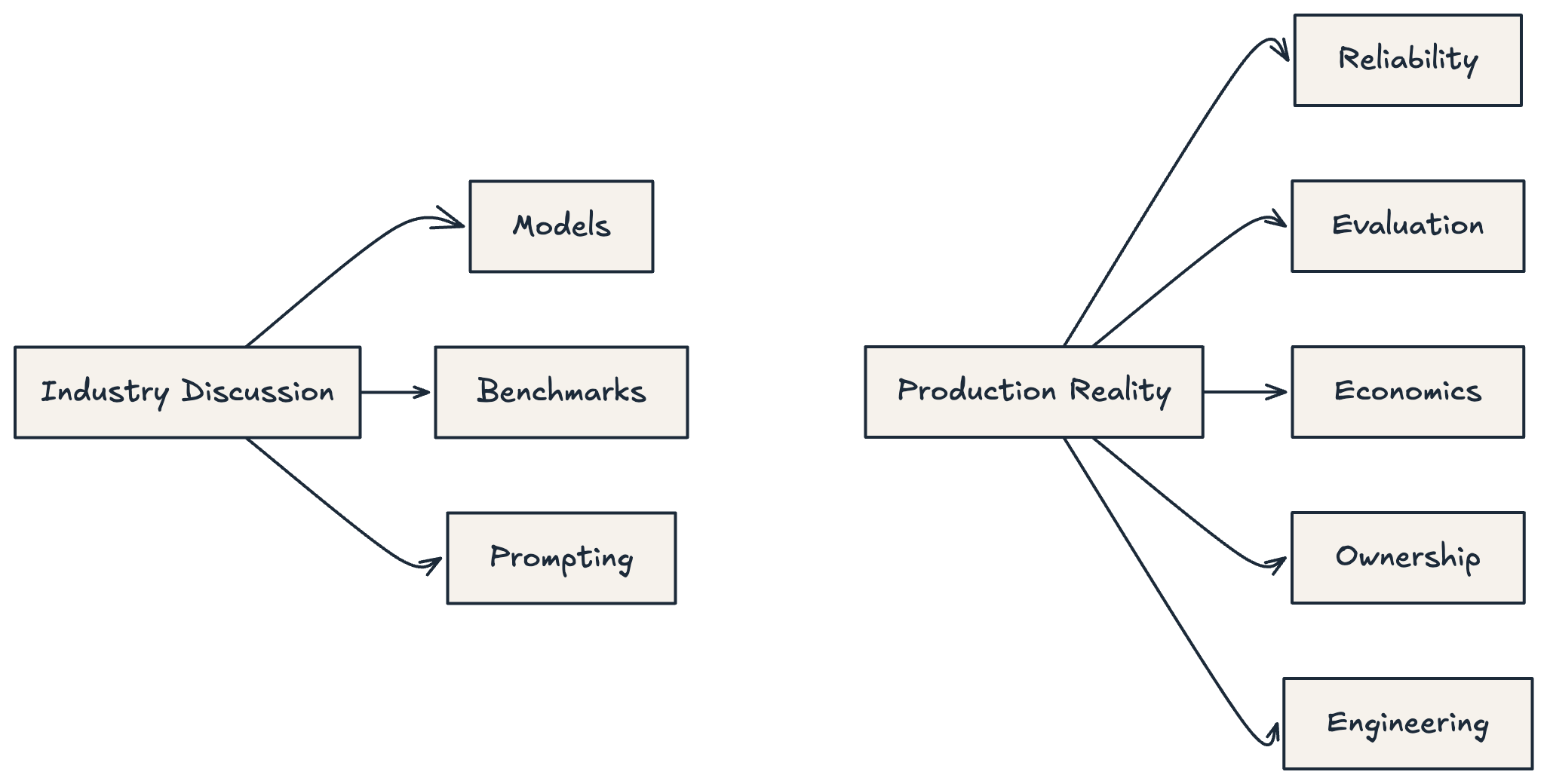
Most AI Problems Are Engineering Problems Disguised as AI Problems
Building a proof of concept has never been easier.
Building a production system is still hard.
The first week is usually spent on prompts, models, embeddings and retrieval.
The next twelve months are spent on:
Reliability
Cost
Monitoring
Access control
Data quality
Human review
Compliance
Change management
The industry talks about the first week. Customers pay for the next twelve months. That’s why many AI projects look successful in a demo and struggle in production. The model works, the system doesn’t.
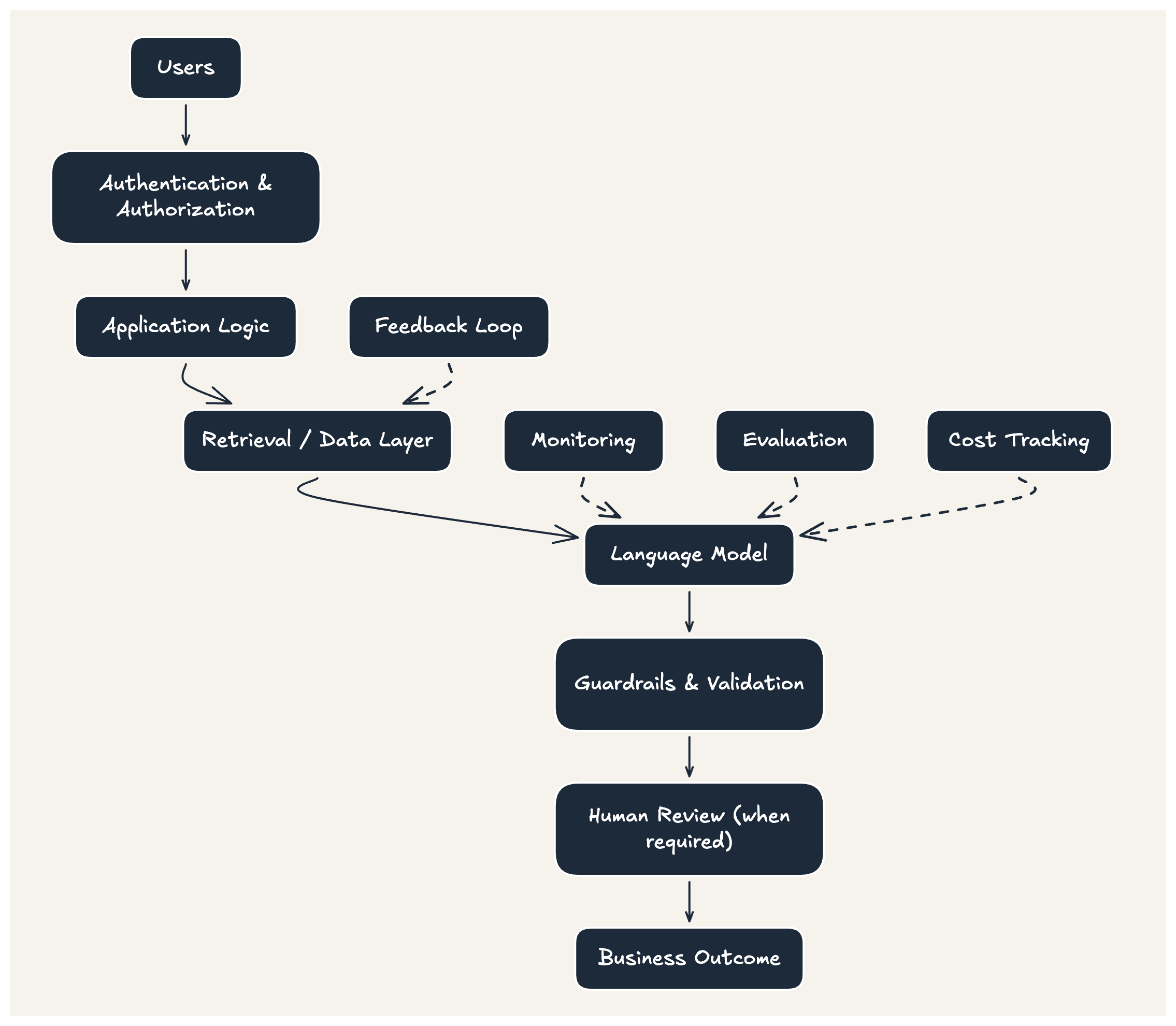
Everyone Tracks Tokens. Few Track Cost.
One of the most common conversations in AI today goes something like this:
“Can we reduce token consumption by 20%?”
Maybe. But why?
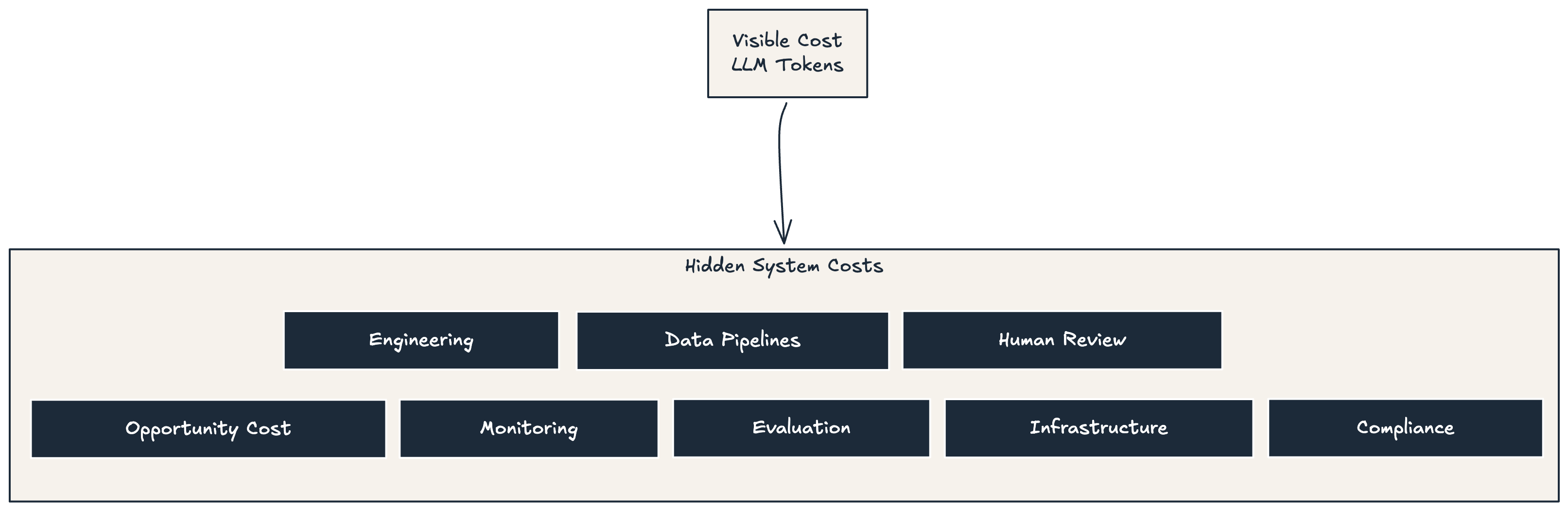
Token costs are visible. System costs are not.
The actual cost of an AI solution includes:
Engineers maintaining it
Data pipelines feeding it
Infrastructure running it
Humans validating outputs
Time spent debugging failures
Reducing API spend from ₹1 lakh to ₹50,000 sounds impressive.
Hiring another engineer to manage the resulting complexity costs far more.
The objective should not be minimizing tokens.
The objective should be maximizing value.
Too many teams optimize the metric that is easiest to measure rather than the one that matters.
Evaluation Is Still an Afterthought
This is the part that worries me most.
Ask a software team how they know a release is better, they’ll show you tests.
Ask many AI teams the same question, you’ll get opinions.
A prompt changes, a model changes, chunk sizes change, retrieval changes, the system feels better. But is it actually better?
Without evaluation, nobody knows.
A surprising number of production AI systems have:
No benchmark dataset
No regression testing
No quality metrics
No acceptance thresholds
Which means every improvement is based on intuition. And intuition does not scale.
One lesson I’ve learned repeatedly is this: Prompting gets attention, evaluation creates reliability.
The teams that win are not the ones with the cleverest prompts. They’re the ones that can prove their system improved.
Accountability Doesn’t Disappear
A language model can generate an answer. But it cannot own the outcome.
Businesses don’t just need information, they need accountability.
Who approved the recommendation? Who signed off on the decision? Who explains the mistake during an audit? Who takes responsibility when things go wrong?
These questions exist outside the model. And they don’t disappear because the answer was generated by AI.
Many enterprise workflows are not information problems, they are ownership problems.
The industry often underestimates the difference.
Complexity Has Found a New Buzzword
Software engineers have always had a tendency to overengineer.
AI has simply given us new vocabulary: Planner agents, Critic agents, Reflection agents, Memory agents, Multi agent systems and so on.
Sometimes these architectures are necessary. Often they are not.
I’ve seen problems solved with five agents that could have been solved with a database query and a business rule.
The goal is not to build the most sophisticated architecture. The goal is to solve the problem reliably, repeatably, at a reasonable cost.
After working on production AI systems, I've started evaluating them through five lenses. I call it REEAD framework.
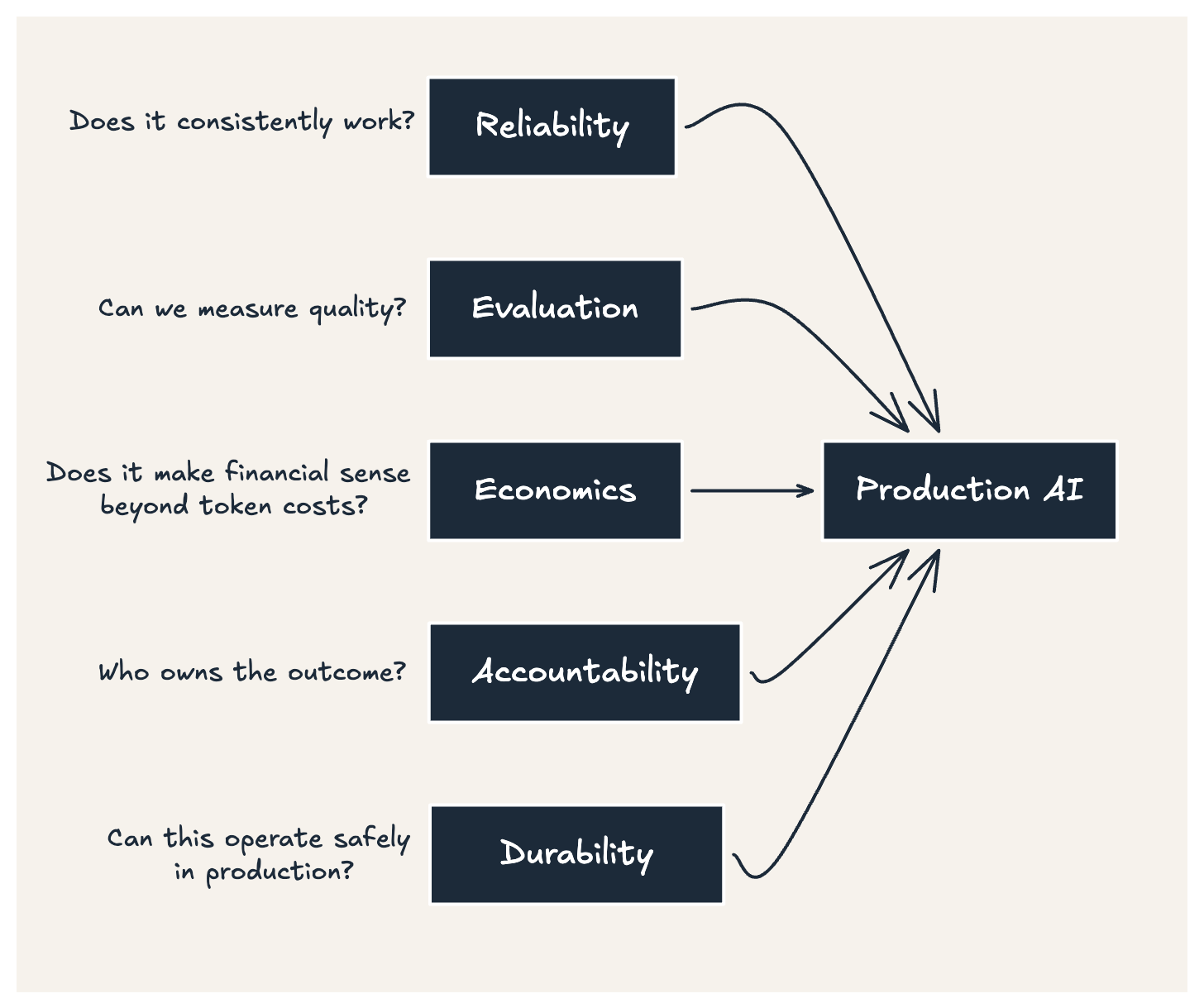
The Real Signal
The AI industry spends a lot of time discussing models. The harder conversation is about systems.
Models will continue to improve.
That part seems inevitable. The bigger differentiator will be the ability to build systems around them that are measurable, reliable, economically viable and have people’s trust.
Because once the novelty wears off, nobody asks what model you used. They ask whether the system works.
And finally if you have made it till the end of this article, would love to hear your thoughts, ideas or suggestions.
